We recently got scammed and someone stole our URL theflyzone.net, so now we are called flyzonecasting.com. Please take note. We are very sorry for any inconvenience. There wll be updates coming soon to this website. Hopefully all for the best! Cheers Al & Jim
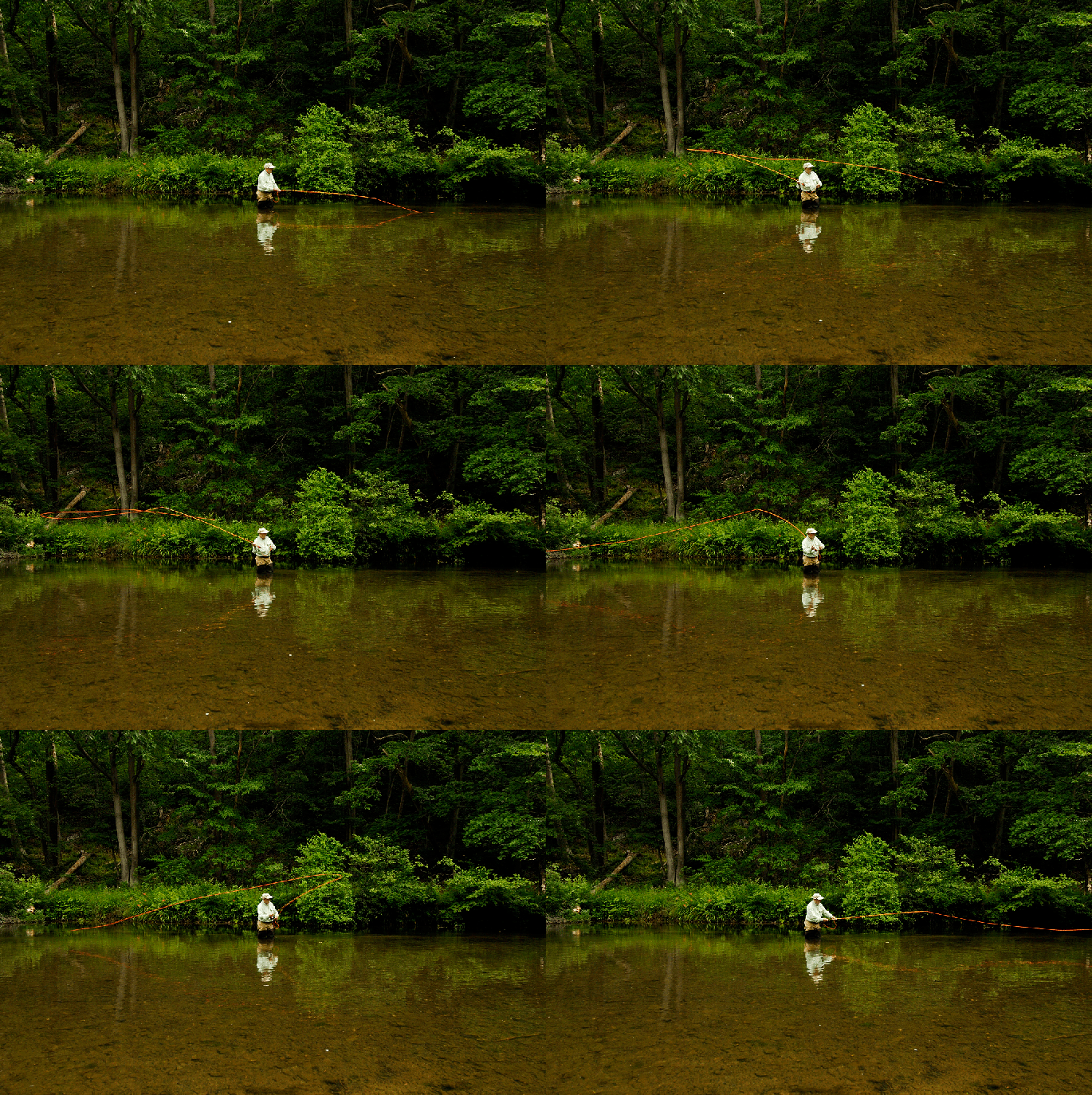
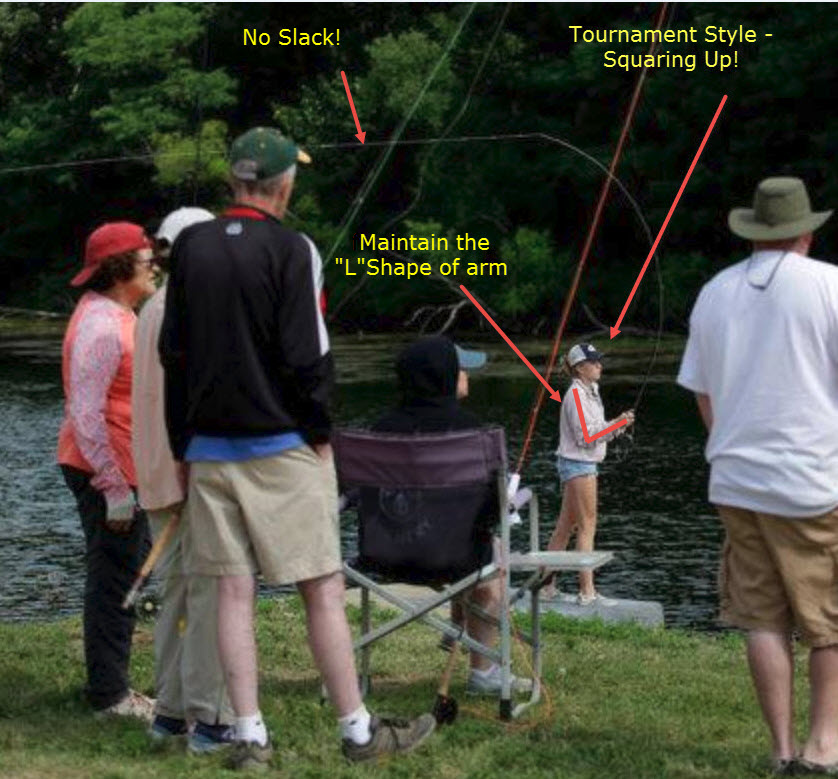
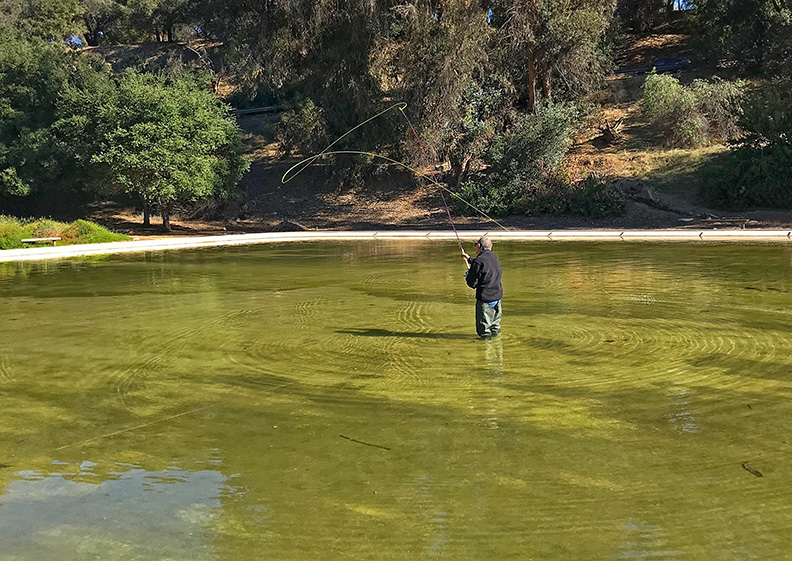
The casting arm is not tucked in tight to his body, but close to the body. It’s a style that is very efficient and uses the strongest muscles– it is canted off to the side. It’s a short cast with a short stroke. Drift does not maintain a straight-line cast; it is a slight increase in stroke length. I would not comment on drift. Fundamentally sound. Lefty is maintaining a straight-line path of the rod tip. Yes, stopping the rod is the highlight. I would not say ducking rod tip, which would create an open loop.
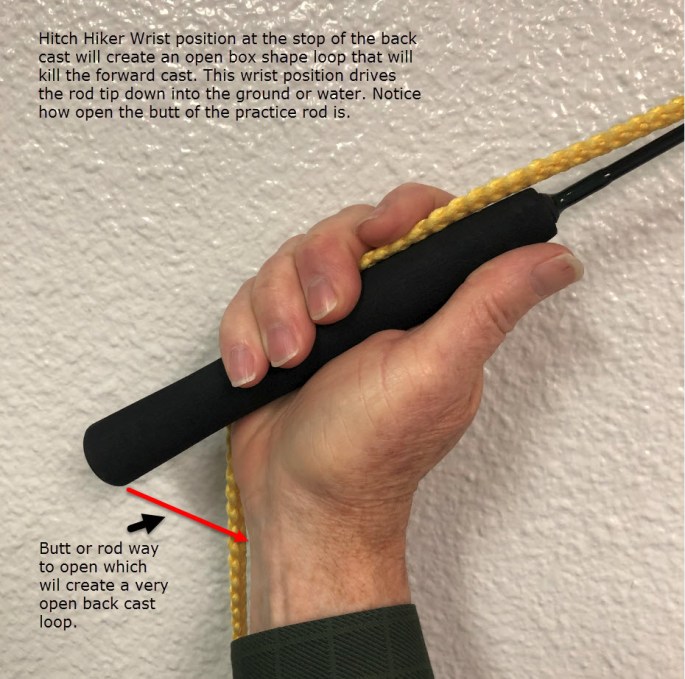
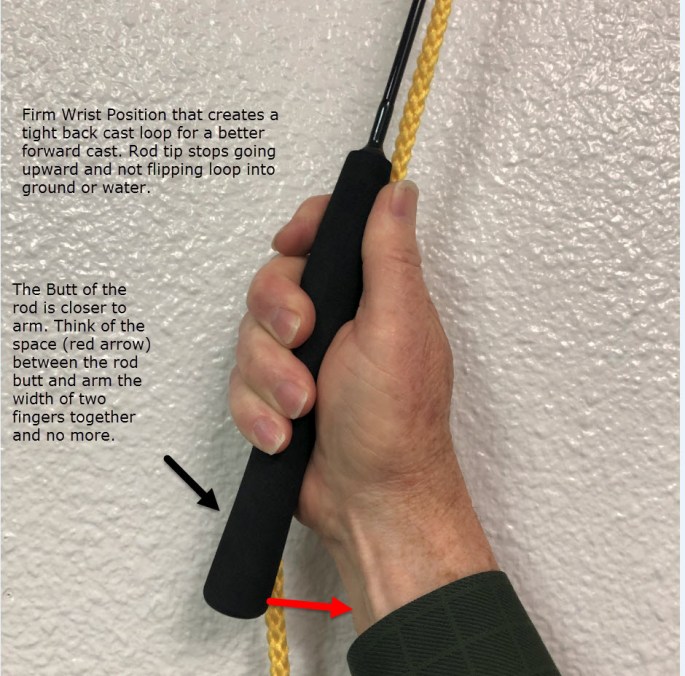
Hitchhiker’s Wrist – An over-rotation of the rod tip that creates a convex open boxy loop. Also causes the back loop to hit the water behind the caster. The path of the rod tip is similar to a windshield wiper. I would say two to three fingers. Minimize the wrist rotation to keep the rod on a straight-line path.
With one back cast and the proper amount of line outside the rod tip (creating load), Al demonstrates the power forward stroke off the haul, which results in throwing the entire 90-foot shooting head and running line into the backing…
“I am always adjusting and improving; I am always learning; that’s why I have to keep practicing.” – Al Q
I believe the back cast is the most important part of the cast. More often than not, I see anglers casting wide open “boxy” looking back loops. These big, open loops do not allow the angler to fully load (bend) their rod for a nice smooth tight forward loop. The wide open back loop has no energy and failed line speed which will hinder rod load or rod bend necessary for the forward loop formation. The cause of this open loop is what I call ” Hitch Hiker’s Wrist” – an open wrist with the thumb sticking out. To cure this curse you must firm up the wrist. Make sure the butt of your rod stays close to your arm, no more than the width of two of your fingers together. It’s all about muscle memory. Practicing with good habits will eventually make you a good caster.
See how short and smooth the power stroke is, it doesn’t take much to deliver a shooting head 90 feet. Jim Solomon makes it look easy but it boils down to sound fundamentals, practice and a balanced outfit. #theflyzone #beonewithyourloop
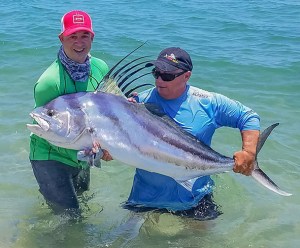
Photo by Larry Acord. Al Q and good friend Jeff DeBrown of Reel Baja Outfitters, holding a solid Rooster fish caught sight casting off the beach on fly estimated between 60 and 70 pounds. East Cape, July 2019
As you know at The Fly Zone we practice casting all the time. We try to recreate real life experiences and challenges; like windy day casting, or getting your fly to lay out straight at 80 feet so when you strip your fly you can come tight immediately. Not that you have to cast 80 feet but it is nice to know you can, the reality is most fish are caught with an accurate cast between 20 and 60 feet. So why do we practice? We practice so we are ready for the opportunity to catch a fish of a lifetime. The Fly Zone is not just a class, it is an attitude, a confidence, it’s the ability to self correct your own casting problems when your fishing. We all want to improve, me included, have fun and maximize our time on the water. The Rooster fish above is a testament to staying in the moment, making a good cast, and being lucky that all the knots held fast! LOL You just never know when a fish of a lifetime tracks and eats your fly, belly on the sand, two feet off the beach. Unless you practice for that moment and it can never be visualized! Tight lines!
Check out Fly Zone’s Jim Solomon releasing on the forward stroke. Watch how far back he gets his hauling hand prior to the release. Everything matters when it comes to distance, one small error in the system and all the forward energy gets interrupted. This is poetry in motion…. – Al Q